
The first restaurant I ever shot was the Bagua tea salon, a few minutes from the Kremlin. I had a five-megapixel Panasonic Lumix LC1 and a wide-angle adapter screwed onto the front of it — and that was enough for magazine spreads and even a few covers. Nobody asked what I was shooting on. They asked whether the food looked alive.
Twenty years later, the question has changed but not really. Now it’s: can you shoot this on a phone? And the answer is the same as it was then — yes, if you know what you’re doing, and no, if you think the gear is the point.
Fifteen years ago, almost no one believed me when I said you could shoot soup from above. Now it’s the default. The same thing is happening with phones. The tool changes; the question doesn’t.
So let’s separate two things that keep getting mixed up: what the instrument can do, and what the person behind it can see. A phone and a camera are not the same. But neither is a photographer and a person holding a camera. A tractor doesn’t make you a farmer.
Restaurant work splits into two genres that are not the same: menu (food) and interior (space). They fail in different ways, and they forgive different things. Start with the food.
Contents
Menu (Food)

Close-up or tight, with controlled light, and one job: make it look appetizing. This is where a phone has real advantages.
- Depth of field. At the same shutter speed, a phone’s small sensor gives you more depth of field than a large camera. And the stabilization lets you move faster, though some cameras (not all) have decent stabilization too.
Why
Depth of field depends on sensor size and focal length. A phone's sensor is tiny and its lens is short, so even wide open almost everything is in focus. A large camera needs f/8–f/11 for the same result — which costs light and risks diffraction. The phone's lens works at its optical sweet spot, giving microcontrast on the sauce or the meat without focus stacking. - Macro. With an iPhone 13 Pro you can shoot from 2 cm — sauce texture, droplets, tight details — without a dedicated macro lens. And you keep your attention on the picture, because swapping lenses (if you need to) also costs attention.
The catch
You have to shoot up close on the wide lens (0.5x). The phone body blocks the light from the window or the lamps, casting a shadow right on the food. Without a flexible side LED, you have nothing to work with. - Speed. Speed in shooting and speed in delivery. The shooting process is roughly the same on a camera and a phone. But the phone hands you a finished file immediately: shot — sent — posted. A camera requires import, conversion, processing. If you need to shoot twenty dishes in a day, that difference in the «after» becomes decisive.

Where the phone stumbles on food
- Complex light (mixed from the room and the lamps above the table) — the phone averages it out.
- Without LED light — no control over the lighting.
Not every LED works
What matters: CRI (the closer to 95–100, the more honest the color), bi-color temperature (to match the room), and the quality of the diffuser. Cheap panels give a green or magenta cast you cannot remove without losing the color of the dish. On a camera, bad light is fixed in post through profile calibration; on a phone, the processor mixes the colors permanently. - Color on a complex dish (greens + sauce + side) — goes to «plastic.» And this leads to hunting for settings on set instead of treating the shoot as a search for light and angle.
Why
The algorithm pushes saturation into the warm zone to make food look more appetizing. On a simple dish it works. On a complex one it breaks: greens go yellow, sauce goes orange, the side goes plastic. And you start turning settings on set instead of looking for light and angle. A camera doesn't do this: its 14-bit RAW pulls clean gradients, while the compressed phone file shows dirty patches and posterization.
📌 For food, a phone can be enough — but only with LED and RAW. For a complex dish and no LED, a camera is clearly better. You have to know how to choose LED — there is a lot out there and not much of it is good in terms of light or reliability. The number of units and the types of modifiers matter. All of it has to be learned and turned into strategy, not into catching light.

Restaurant Interior
Different story. The job is to «convey the charm of the space.» And here the phone more often loses:
- Dark room. The algorithm merges 9–15 frames to average out noise — and along with the noise it erases texture. The darker the room, the more aggressive the averaging: on a large camera the pixel is bigger and gets more light, so texture holds better. You can fight it with settings, but the fight is too unequal.
- Mixed light (window + lamps). The phone knows how to blend light. But the averaged picture looks like a neural network generated it. And people are almost allergic to AI plastic now. Trust is built on naturalness. In the long run, that matters for business.
- Seams. Enlarge the frame even slightly and you immediately see artifacts at the seams.
Why
At the boundary between zones of different temperature (cold window light merging with warm lamplight) a thin band appears with altered color or brightness. It's the seam from stitching two exposures. On a phone screen you don't see it. In print or at magnification you do. That seam gives away the "digital" origin of the frame and ruins the whole thing. You can fix it with generative fill, but that's doing it fast and badly, then doing it better and hunting for fleas by hand. Not worth it.


- Tight room and geometry. No shift lens, and the in-app perspective correction reduces quality because the sensor is too small for trapezoidal distortion and the subsequent crop.
Why
Perspective correction in an app is software interpolation: it stretches some pixels and compresses others. A large sensor's pixel reserve (45–60 MP) absorbs this without noticeable loss. A small phone sensor has no reserve — and the 0.5x wide also distorts lines with barrel distortion. The stronger the correction, the more visible the loss. The corners turn into mush. - Stray reflections. Lacquered tables, glossy tile, glassware. On a camera you screw on a physical polarizer (CPL) and reflections are wiped out in one motion. On a phone, clip-on filters work badly, cover the LiDAR sensor and break autofocus in the dark.
- Print. If you need to print photos for a menu, a lightbox, or worse — a banner — the image is «not printable.»
Подробнее
"Not printable" doesn't mean "impossible to print." It means "impossible to print so that no artifacts are visible at close viewing." For 15×22 at arm's length — fine. For a lightbox, where the image is looked at more seriously, or for a street banner meant to be read from ten meters — no. Size and viewing distance matter. You can hand it to a stable diffusion specialist, feed it as a sketch, and try to redraw on that basis. But it will be slow, hard at large resolutions, and labor-intensive. Meaning you'll pay for the time.


📌The compromise of shooting restaurant interiors is too obvious. Unless, of course, it’s for stories. For 15×22 print in a dark room — no.
The Psychology of the Set: Camera as a Social Shield
The tripod doesn’t buy you respect. Some photographers think the weight of the gear adds to their own weight — meaning importance. By that logic, a tripod, a camera, and lighting gear supposedly work better than «a phone.» But in reality they just work. The light lights, the tripod stands, the camera shoots.
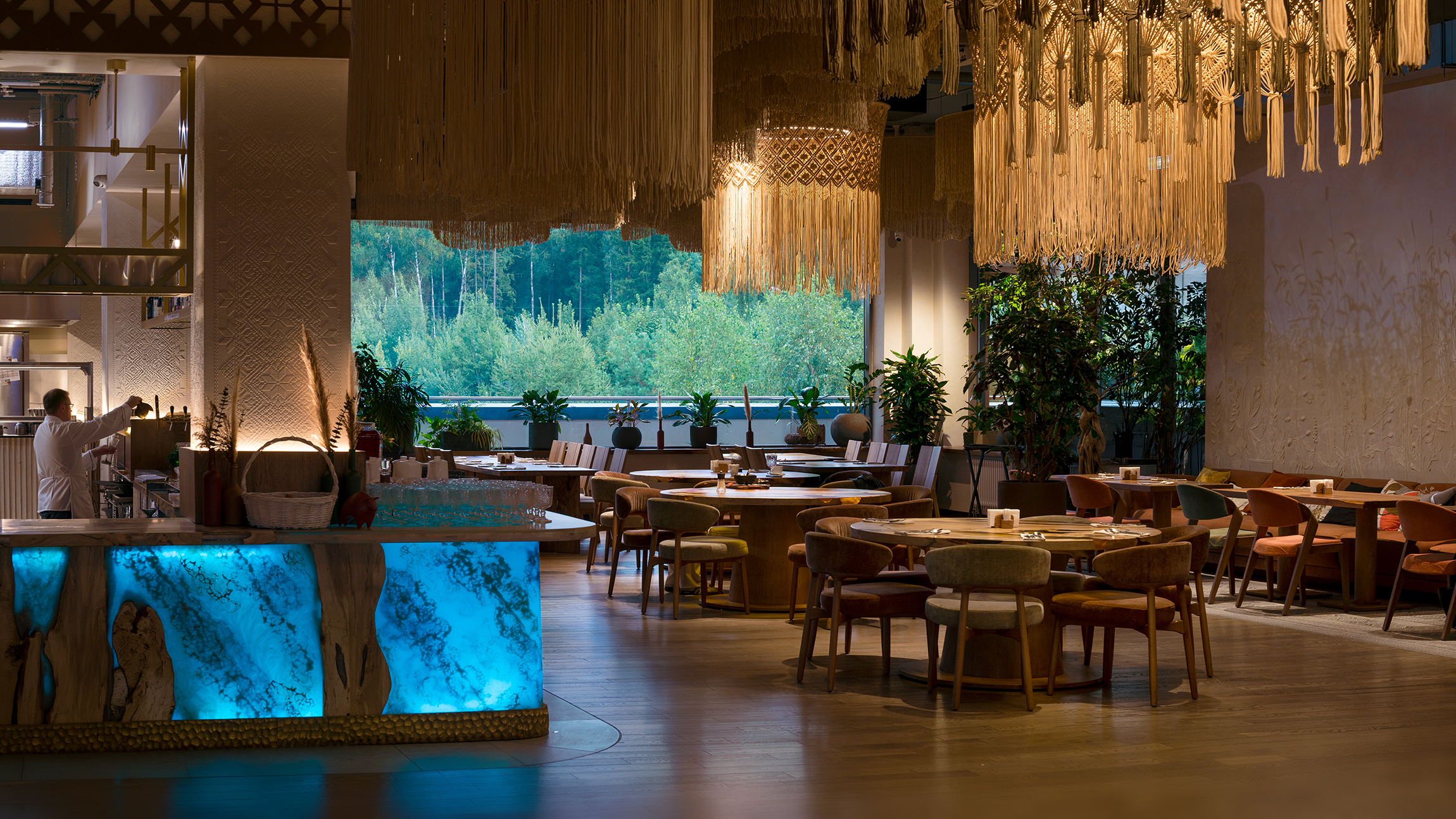
Respect comes from something else. From what you say. From how you understand the client’s task and the work of their people. With a phone or with a camera — no difference. The only difference is whether you know how to listen and work with a team, or hide behind the gear.
Equipment, Practice, and a Trained Eye
A phone doesn’t give you a trained eye. Neither does a camera. A person with a camera is not equal to a photographer, just as a tractor driver is not equal to a person with a tractor. And a person with a phone is not equal to a person without a trained eye.
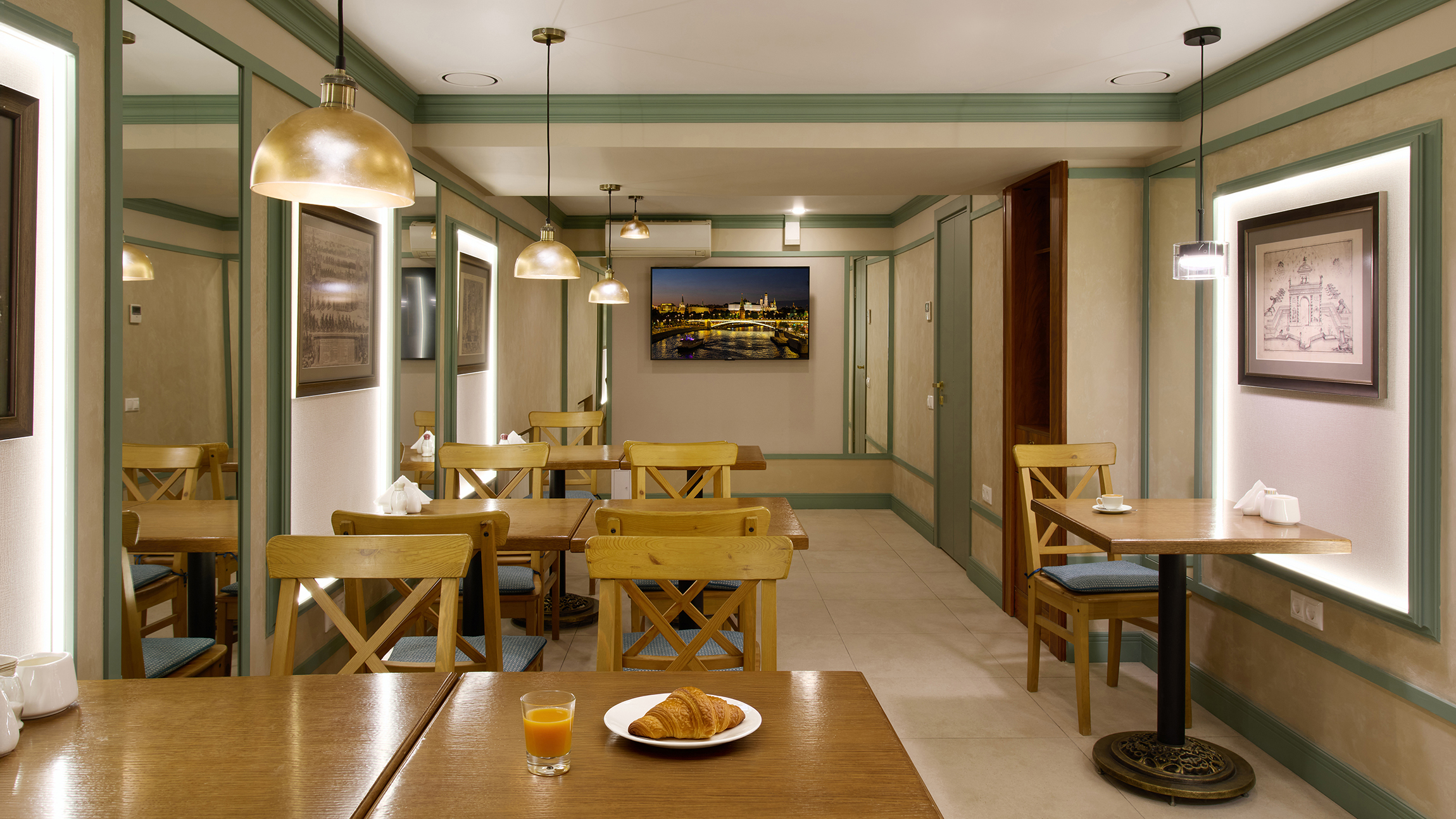
A trained eye is a conscious understanding of beauty, the ability to see what works in a frame and what doesn’t. It’s not about elitism. For commercial photographers, it’s more about service. Our photographs reflect not only the promotion of a «product» but also our own ideas of harmony. And we try to touch the notes of beauty in the viewer. We compete in that. Because the modern person’s visual literacy is enormous. They are surrounded by photographs, architecture, design — all of it has absorbed ideas of the ideal from many artists.
The «rule of thirds» is a grid. It helps a beginner not put the subject in the center. But it doesn’t explain why one frame works and another doesn’t. And what is this «work» anyway? Working means the spots of light and shadow come together in a rhythm, the forms interact, and the eye goes where it should. The grid doesn’t give you that.
The elegance of a good photograph is far from the «rule of thirds.» It’s more about finding rhythm, spots (of color, of tone), and forms. And another thing that is often forgotten in advertising — working with the meaning of objects. Neither a phone nor a camera will teach you that. But everyone has their own talents. And to show talent you need practice — the practice of looking at the world through the frame of a phone or the viewfinder of a camera.
Rhythm, spots, and forms
The Client and the Job
There is a café by the highway. It needs stories, Google Maps, a delivery menu. They have great shawarma and a smiling shawarma guy; grim-looking men smile like children when they get their wrap. A phone covers this quickly and cheaply.
Подробнее
There is Turandot, a Moscow restaurant known for its interiors — a space of art where every element carries meaning. Artists work there — Andrey Dellos, Alexander Popov. A photographer doesn’t walk in there «with a phone»; he walks in with a trained eye that matches the level.
But even a shawarma shop should spend a handful of coins on a photographer once. It’s less than the café spends on its sign. Because it’s pennies within the business, and attracting clients is the point of the process. The difference between Turandot and café «Oasis» is not in the «rank» of the establishment. It’s in different needs. The café needs to «show what’s there,» but better than others. Turandot needs to «convey meaning.» Because Turandot is unique.
 Shooting on the Client’s Phone: What the Photographer Loses

The question: «Can you shoot on my phone/camera?» Usually it sounds like an offer to save money — the device is already there. At first glance it’s logical: less equipment — lower cost. But it’s a question about the rights and marketing of the photographer and the client. And here’s what happens if you agree.
- The files belong to the client. If the shoot happens on the client’s device — the files belong to the client. You can’t show them in your portfolio. You can’t sell them, if that’s part of your business. And a portfolio is marketing. You lose not only the money for this particular shoot but also the contacts that those photos would have brought. Shooting on someone else’s device without a written contract is losing control over the file. The rights may be yours by law — but proving it and protecting it without paper is almost impossible. But there is a nuance that depends on the country:
In Russia
The right to a photo arises with the photographer automatically at creation. But if you shoot on the client's phone — the file is physically with the client, and proving you were the author is hard. In Russia there is no "work for hire" in the Western sense: unless the contract specifies transfer of exclusive rights, they remain with the photographer — even if he shot on someone else's gear. In practice the client with the file can use it as he likes, and the photographer has nothing to dispute it with without a written contract. If the photographer works under an employment contract and the shoot is part of his duties — the exclusive right may belong to the employer (Art. 1295 of the Civil Code of the RF). Under a civil law contract (contract, author's order) — the rights stay with the photographer, if not transferred.In the US
Harsher. Under the Copyright Act, if a work is created as "work made for hire" (employment or a written contract with explicit wording), the rights initially belong to the client, not the photographer. If it is not work for hire but an ordinary order — the rights are with the photographer, and the client receives only a license (scope specified in the contract). Shooting on the client's phone without a contract doesn't give the client the right to use the photos in advertising — but it gives a file he can use "as it turns out," and proving a violation is hard.In the EU (and the UK)
Same basic principle as in the US: the author is the one who pressed the button. But the EU DSM Directive strengthened the author's position: if the fee is disproportionately low relative to the client's income, the author can demand a review. So even if you agreed to shoot "cheaply on the client's phone," in the EU you could theoretically challenge the deal later if the client earned a lot on the photos. In practice, proving it is long and expensive. - The condition of the camera is unknown. If the client offers his camera — you don’t know what condition it’s in. The sensor may be dirty. The shutter may break during the shoot. The photographer isn’t responsible for that. But he still insists on paying for the day — because the work was done.
- How this affects the day rate. Less processing labor reduces the base price. But the photographer loses interest in adding to his portfolio and loses possible promotion. This adds to the price. I don’t sell my sword for a bowl of soup.
 So What’s the Answer?

The question «phone or camera» is a question of what’s appropriate. If the client wants a result — he pays for a trained eye. And then it doesn’t matter what you shoot on — a phone or a camera. What matters is what you see and what you do.
Shooting on a phone is both possible and necessary. A phone is a convenient thing that lets you shoot a lot and often — that is, think about composition, search for the interaction of objects in the frame. That’s how the mind is trained, how problems are recognized and solutions are found. That is the process of self-education and building a trained eye. And it will work if you orient yourself toward painting or known photographs. If you stew in your own juice, there will be no fruit.
Moving from a phone to a «professional» camera and getting a «big» result right away is a task of a different level. You move from the picture the algorithm makes to the picture you control yourself. You don’t want to go back.

P.S. If today you shot a menu on a phone for stories, and six months later the client opens a franchise and decides to print your frame on a huge street banner or a lightbox — the project will have to be completely re-shot. A heavy camera with honest megapixels and a large sensor gives insurance: its RAW is like clay. A year later you can crop a small detail of the dish and stretch it for the task. A phone frame will not survive that transformation.
Notes
- 1 15×22 is the format for menus, table tents, cards on tables — what the guest sees up close. At that distance you see the seams from frame stitching and the artifacts of noise reduction. For a street rooftop banner a phone might pass — from a distance you can’t see it. For 15×22 — no. Physical cleanliness at arm’s length is decisive. ↩
- 2 On «generative fill» for stitching seams. Fixing Smart HDR artifacts with neural networks in Photoshop is a trap for a commercial photographer. AI draws pixels based on its own logic, not the real interior. Printed at 15×22 cm in high resolution, the texture of «generative» wood or fabric differs in graininess from the real frame. The eye catches that plastic seam. ↩
- 3 On CRI and video light for food. High CRI > 95 is the basic requirement. But for food photography R9 (saturated red) is critical. Most cheap LED panels with an overall CRI of 95 have R9 at 50–60. As a result, meat, sauces, apples and tuna look pale, gray or bluish in phone photos. You pull the color in post and destroy the file. ↩
- 4 On proving authorship when shooting on someone else’s phone. Without a written contract, the only technical proof in a Russian court (Art. 1257 of the Civil Code of the RF) or in the US is serial shooting, RAW duplicates and original EXIF. If you shoot on the client’s phone — shoot 2–3 behind-the-scenes frames on your own phone in parallel: you, the other device, the plate, same angle. Ironclad evidence for court or for social media lawyers if the client «forgets» about payment. ↩
- 5 CMYK and profiles when printing 15×22 cm. The iPhone screen works in Display P3. Restaurant lightboxes and digital menu printers work in CMYK (FOGRA39 and similar) or sRGB. When output for 15×22 print, the deep emerald greens, neon cocktails and rich sauces that glowed on the smartphone screen will inevitably dim and turn dirty. RAW from a large camera lets you control this shift through soft proofing in Lightroom; the compressed phone file often simply breaks in color when converted to CMYK. ↩
- 6 The diffraction limit of microlenses. On large cameras diffraction begins at f/11–f/16. On a phone’s microscopic optics, because of the tiny relative aperture, the diffraction limit comes much earlier — around f/2.8–f/4 in full-frame equivalent. The phone gets around it with software edge sharpening. In menu-format print, this trick of physics turns into harsh white halos at object boundaries instead of real optical detail. ↩
- 7 File system limits and RAW transfer. Shooting DNG through third-party software (Lightroom/Halide) can produce files of 40–80 MB per frame. Transferring «by cable» to a Windows computer, the standard MTP protocol often hangs or silently converts DNG to a compressed JPEG. To keep the original quality on production, export only as uncompressed archives via cloud (iCloud, Drive) or directly via AirDrop to a Mac. ↩